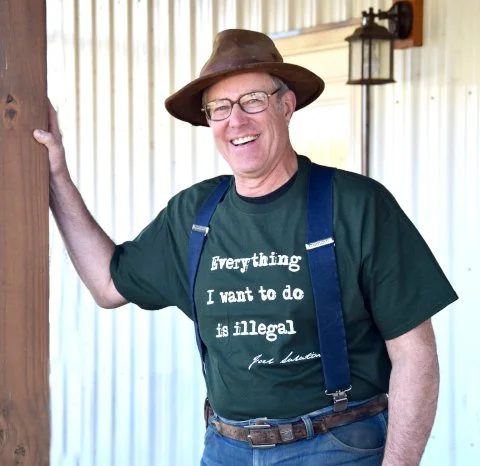
In a special live episode of White Mountain Garden Talk, renowned regenerative farmer and author Joel Salatin joined the conversation to share his lifelong commitment to food freedom, local agriculture, and resilient communities. Drawing from his own experience running a multigenerational farm in Virginia, Salatin explained how a pivotal clash with state regulators in the 1990s transformed him from a successful farmer into a national voice for food sovereignty. That moment, he says, clarified his purpose: standing up for the right of farmers and consumers to choose how food is grown, prepared, and shared.
Throughout the interview, Salatin challenged the industrial food system, pointing out how regulations and ultra-processed convenience foods have pushed small farmers out of local markets while stripping consumers of real choice. He argued that food sovereignty begins at the most personal level—the ability to decide what we eat and where it comes from. From backyard gardens to community-based food exchanges, Salatin emphasized that there is no food shortage, only an access and creativity problem, made worse by long supply chains and widespread food waste.
Salatin also offered a hopeful path forward, especially for new and young farmers. His four keys to a profitable, regenerative farm—direct marketing, diversification, following ecological patterns, and people-centered systems—highlight how small-scale agriculture can thrive while healing land and communities. Ultimately, his message was clear and empowering: when farmers are free to serve their neighbors directly, and when people reconnect with growing and preparing food, resilient local food systems don’t just survive—they flourish.