One of the most common things we come across year after year, is how so many people did not have a very good harvest, if anything before the fall frosts came and the summer harvests came to an end. In most cases, people are starting their seeds way too late. If they buy plants, they’re buying them way too young to plant at the beginning of the summer harvest season.
The very first thing I ask, is WHEN did you start your seeds or when did you transplant your “starts” (young plants)? Since we live in a high elevation and short growing season due to cold winter seasons, one needs to take these into account. Example; veggies that take a while to grow, produce and ripen, need to be planted early. I make sure I start my tomato seeds either in December or January just so I can have them ready by July. I do have greenhouses, but I do not heat them, so they still can get below freezing inside.
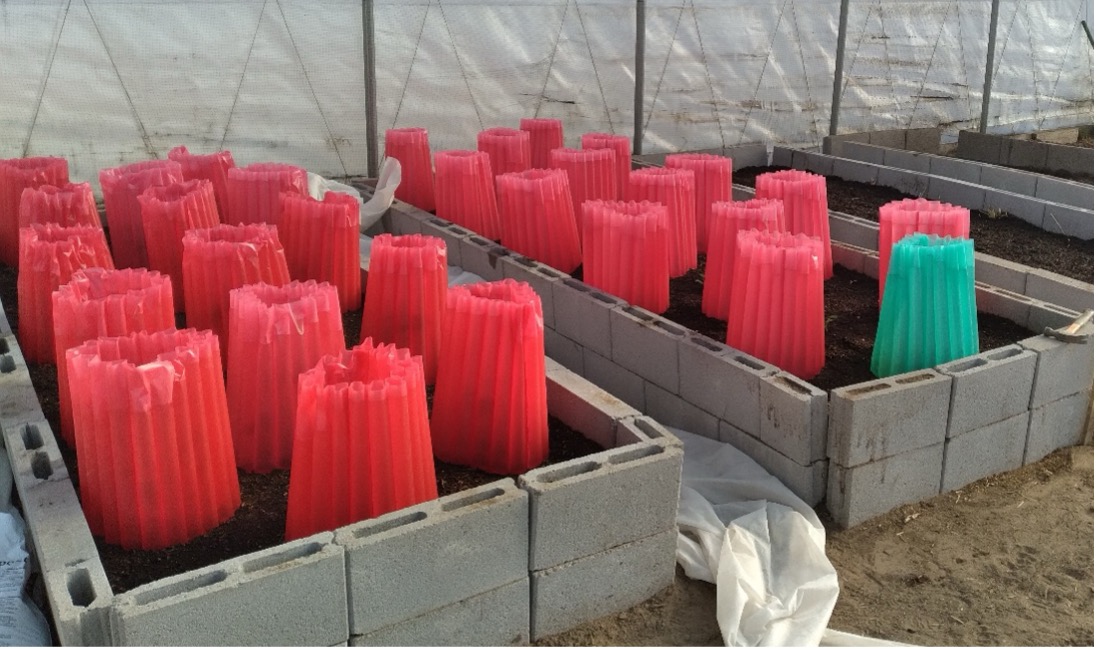
Summer plants (tomatoes, peppers, squashes, eggplant etc) need warmer temps. I utilize what are called Walls-O-Water to help insulate my delicate summer plants. I start them early and I always “over-seed” because not every plant will make it to full harvest. Weather, critters, insects, or an oops, can always leave you losing some of your seedlings or starts.
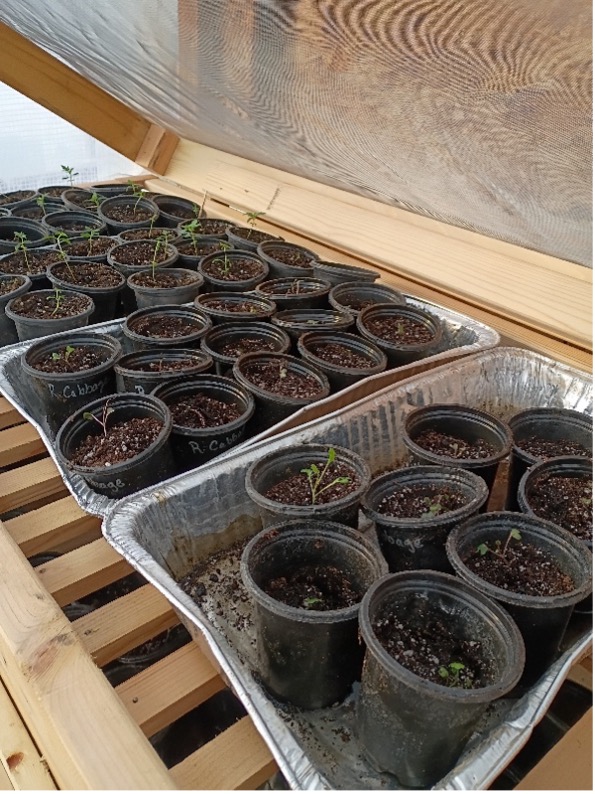
I generally will transplant my summer “starts” (farther along than seedlings) into my beds sometime in March to get them in the ground, even though I have already transplanted them as seedlings, into 3” or 4”. Additionally, I put my Walls-O-Water around each of them to keep them insulated. This past season, I also made small greenhouses within my greenhouse, over many of the beds that have plants that are not cold tolerant. This way, there’s triple layers of insulation to keep them toasty warm. Once you get these “starts” into the ground, their roots can greatly expand, and these babies will take off growing like crazy! It’s all about keeping them warm until we get past the really cold temps.
For those who do not have greenhouses, you can still do something similar outside over your garden beds or rows. You’ll need to get some Walls-O-Water (google it to find resources) and also get yourself some 10’ or longer pvc piping that you can fit the ends over rebar in the ground, then arch the pipe to the rebar on the other side. Place the pvc piping into an arch every 3-4 feet. Then, you will need heavy-duty clear plastic or opaque plastic so the sun can get through and trap the warm air inside. I would also do a double arch over each one, meaning have a second layer of pipe that’s longer, so you can arch it over each pipe, but have it about 10-12” over the one below it, and cover that with the plastic also. That way you have that air space for insulation between the two layers of the arched plastic.
I start my seeds Dec/Jan, then squashes generally Feb/March, and anything root veggies or greens, I can grow year-round. Greens don’t take too long to mature. Onions take a while, radishes, beets and carrots grow rather quickly.
The last thing I’d like to mention is, keep in mind that your SOIL is EVERYTHING! This is where the roots of the plants will take up the nutrients in the soil to feed the plant and all the veggies they’re growing. You need fertilizer, good quality ORGANIC soil. Learn to compost and make some of your own soil, it will save you a lot of money.
Planting and growing anything takes practice. You’ll learn each year you grow something, so don’t give up. It’s worth it!
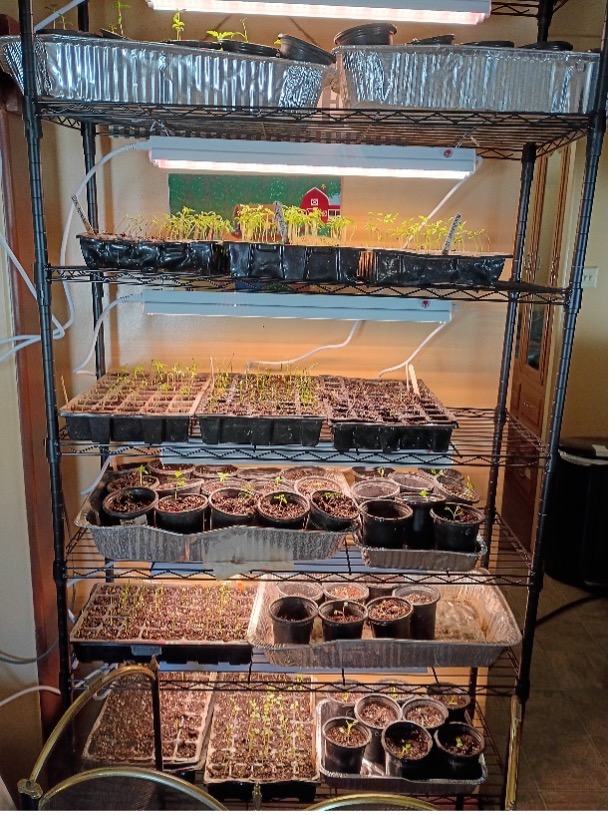
Starting seeds indoors near heat (you can use seed heat mats also) and under grow lights.
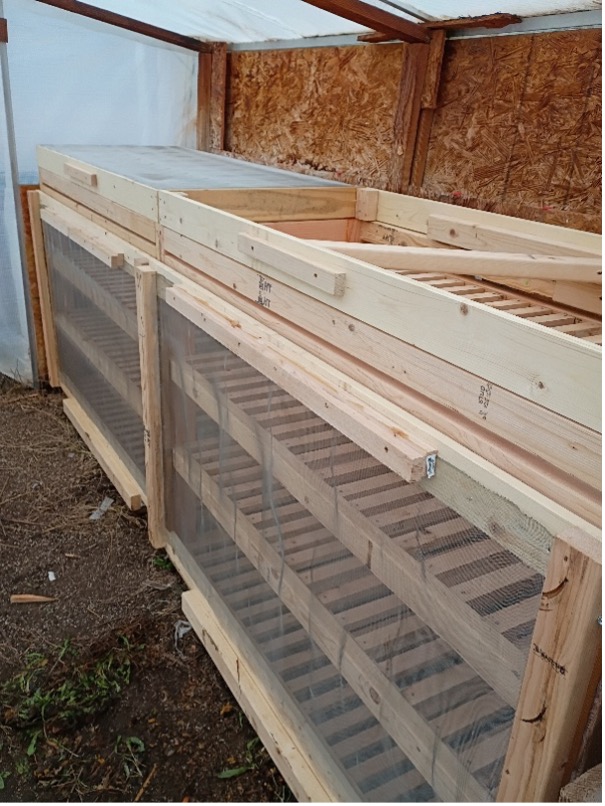
When the seeds sprout and too big for seed trays, I transplant into 3” pots and move out into a very small heated space that is sectioned off in one of the greenhouses, into cabinets that are MOUSE PROOF!
Then, mid-March is when I transplant into the beds in the greenhouse and put my Walls-O-Water around each one to keep them toasty warm.